Interview

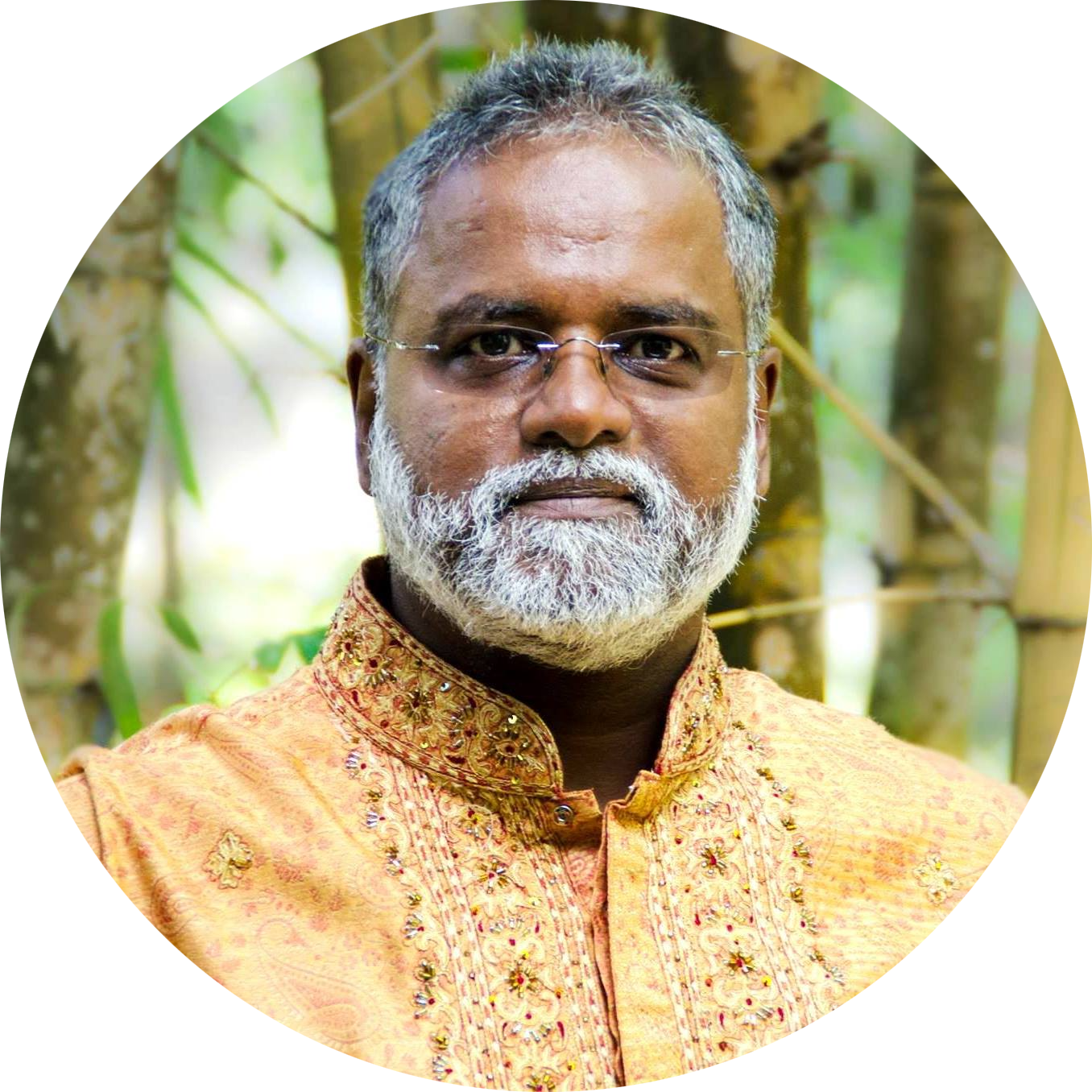
It is once in many decades that an enlightened being, after having reached the zenith of human consciousness, continues to remain on earth for the sake of humanity. It is very rare to come across such an altruistic being. The soil of Mauritius is indeed blessed to have such an enlightened Master in the form of Swami Paramananda.

The query regarding the various connotations of the word ‘Swami’ set off the pace of the interview. The Master terms clarified in very concise that a Swami is one who has attained the peak of consciousness -- the ultimate possibility of human consciousness. Having transformed the ego, a Swami has attained the higher self. Potentially every individual is a swami, yet to develop into one is indeed an arduous task that can even take many births. Swamiji stated that he himself started the spiritual life right at an early age and his spiritual thirst was very intense. This happens to be an essential prerequisite to become a Swami. He said that being a Swami does not confine one to a particular community, sect or religion; rather one belongs to the whole existence. He revealed that his first encounter with spirituality and religion was the Bible and the first experience was with Jesus Christ.

Through further probing, Swamiji shed light on how the rare enlightened beings come down to a lower level out of compassion to become guide seekers. Otherwise, people would be ignorant about the truth on God, the origin of the universe, the soul and life itself and so many things in existence. Through his initial glimpse of Samadhi, Swamiji realised that he was destined to become a teacher to help people, though the urge to teach did not appeal to him. He experienced such profound silence, enaffable bliss and was in a dilemma of how to convey something that was beyond mind, beyond expression, beyond words to people.

When questioned on the difficulty to teach people today who are too engrossed in materialism, the spiritual Master did acknowledge that it was challenging, yet he creates the environment, kindles the interest to develop the spiritual thirst and makes people realise that even the greatest material accomplishment does not fulfil life. There is far greater potential latent in us that has to be awakened.

To the issue pertaining to the 95 % unconsciousness of man as being the underlying cause of many problems in the world, Swami Paramananda elucidated that the core of spiritual science is about transforming this unconsciousness. Accordingly, he uses a variety of methods – traditional, modern, scientific, passive and above all dynamic to awaken the individual to higher realm as dissemination of spiritual knowledge alone is inadequate.

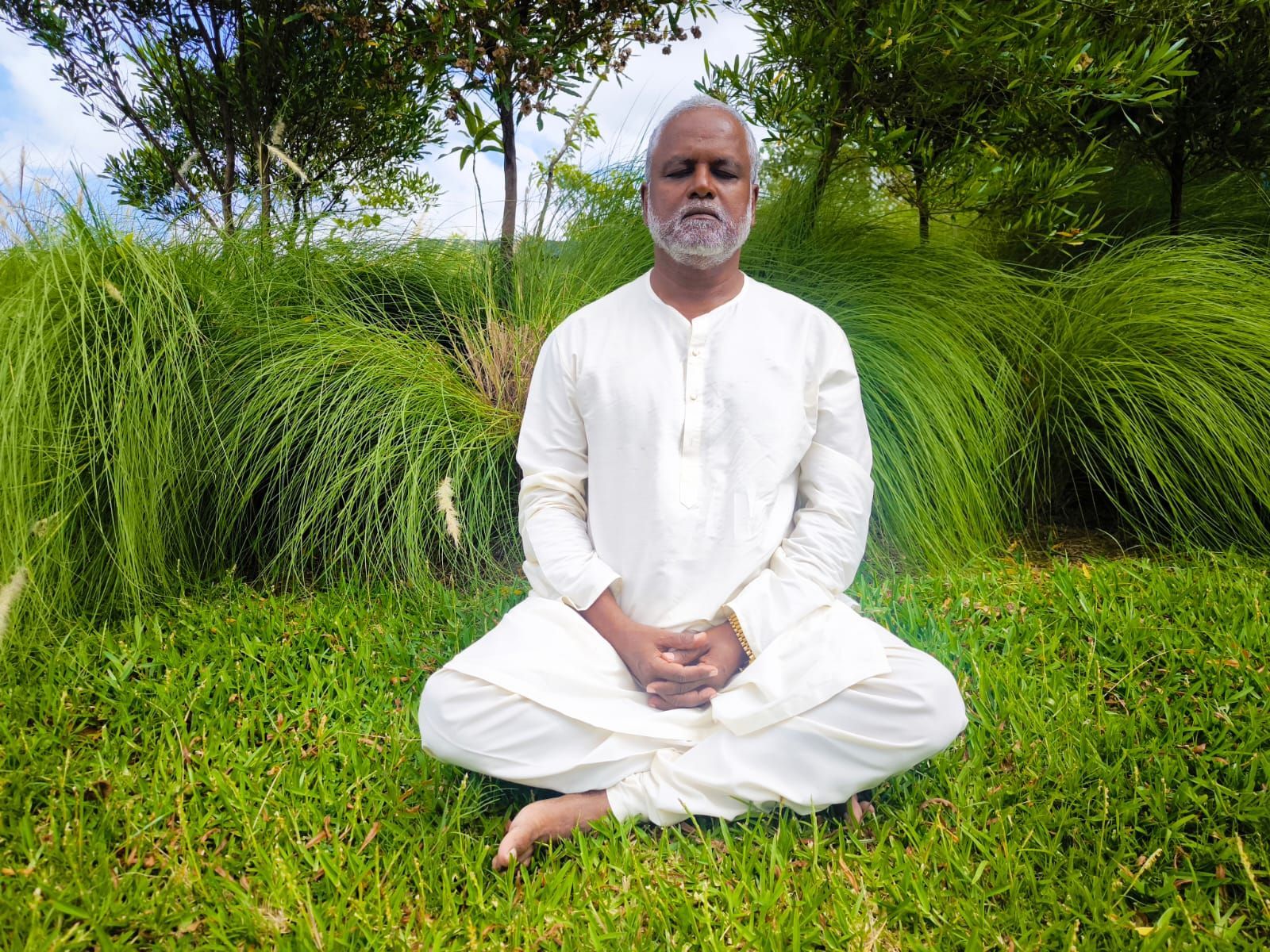
The Master further explained that people need to change their habitual mode of living to adopt the spiritual path, the path of meditation and to be aware that their true abode is the soul. They should realise that material pursuit is not the ultimate goal but rather deviates man from the right way of living. He assured that outward renunciation of relationships and possessions is not necessary. He also elaborated on the four aims of life as propounded by the ancient mystics namely kama (sensual pleasure), artha (material progress), dharma (living with the laws of existence) and eventually moksha, the attainment of the ultimate possibility of human consciousness. Conditioning, ignorance and habit prevent man from realising the ultimate goal which once achieved, there is nothing else to attain. Many people are searching for something other than material achievements but they do not know what door to knock. Swami Paramananda stated that he is the door, he represents that opportunity. His writings, books, words are all invitation for the inward journey. His writings also thrust people to think. However the spiritual path cannot be imposed on people for spirituality connotes freedom, born of interest, rooted in wisdom and understanding.

Swamiji also talked of virtue as not being a product of instruction; rather it surges as a spontaneous overflow of an expanded consciousness and a transformed mind and heart. Self-education, the true education helps in the process of transforming the layers of unconsciousness of the individual and has nothing to do with cramming or learning scriptures.

Swamiji’s concluding words focussed on his vision of bringing a global mind transformation. The science of meditation is the key to this vision.

He is convinced that

“Our destiny is celebration, to live in brotherhood, in love,

in peace , harmony,  justice and to celebrate life.

We can achieve that only when there is a change in attitude.”